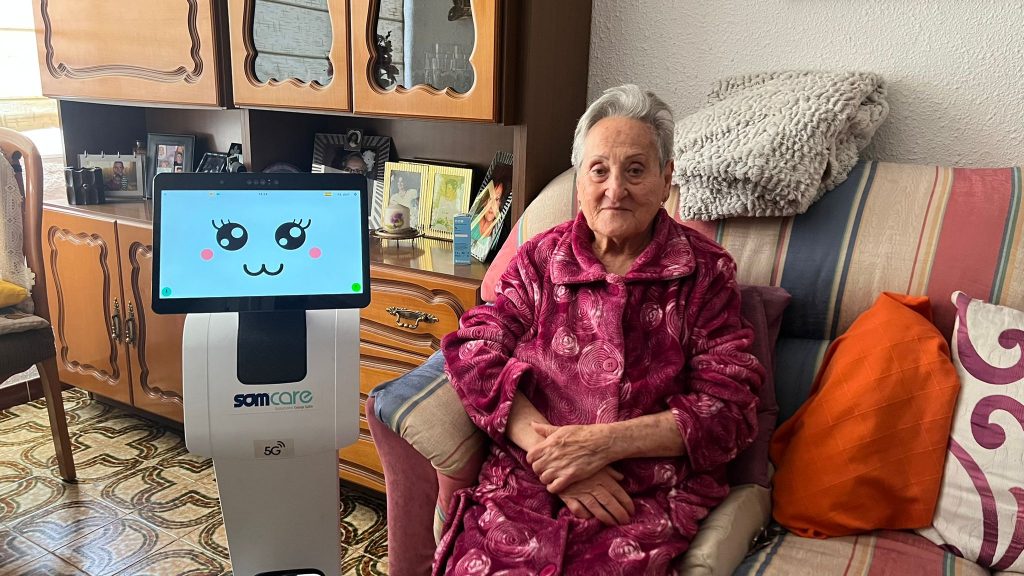


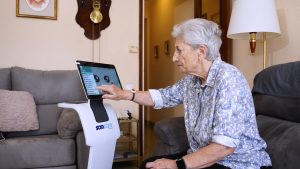



Group Saltó, in collaboration with the Health Cures Research Group (GReCS) of the Biomedical Research Institute of Lleida (IRBLleida), has launched a new pilot project that will allow five elderly people from Golmés, Lleida to live with the social robot Temi in their homes. This initiative is part of the ‘Community alternatives to institutionalisation’ call of the Hub for Social and Health Innovation (HiSS).
The aim of the pilot is to assess the impact of social robotics as a caregiver support tool for remote monitoring and improving the autonomy of elderly people in their daily lives.
This deployment in Golmés represents the second phase of the project, which has already been developed previously with a first pilot experience in Hospitalet de Llobregat, where five elderly people lived with the Temi robot in their homes at the beginning of the year.
With the increase in life expectancy and the forecast that in 2034 there will be nearly two million people over the age of 65 in Catalonia (according to Idescat), it is essential to reinforce the care and treatment system. Guaranteeing an optimal quality of life for the elderly and providing more resources for professionals in the sector are essential priorities to meet this challenge. It is necessary to promote new solutions that improve care and ensure adequate support for those who require it.
Technology 4.0 is positioned as a key ally in this challenge, facilitating home care, optimising available resources and enabling more proactive intervention in risk situations.
Forgetting to take medication, vulnerability to falls or chronic health problems, lack of connection with caregivers or relatives, accelerate the deterioration of people’s physical and mental health.
Temi, the intelligent social care robot, acts as a link between the elderly person and their care environment. From home, each participant can receive personalised reminders, maintain contact with family members and professionals through video calls, and request assistance in case of emergency. In addition, its functions are designed to promote social interaction and emotional well-being.
The HiSS project is an initiative of the Consorci Sanitari de Terrassa and the Joan Costa y Roma Foundation within the Integrated Care Strategy of the Departments of Health and Social Rights and with the collaboration of the future Agency for Integrated Social and Health Care of Catalonia, whose main objective is to promote innovative projects that respond to real problems of society in the social and health fields.
The Biomedical Research Institute of Lleida will act as external validator of the project, analysing in depth the results and the perception of the participants in order to evaluate the real impact of this technology in their daily lives.
With this initiative, we reaffirm our commitment to innovation applied to social welfare, developing solutions that promote the autonomy, safety and quality of life of the elderly in their own home.