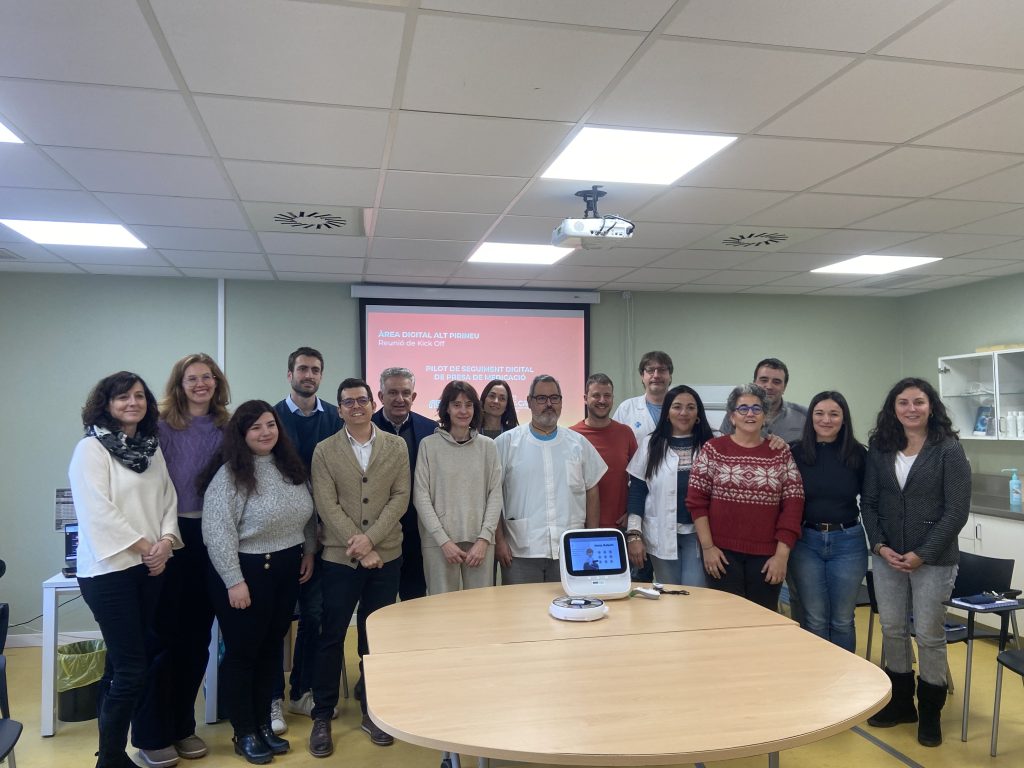



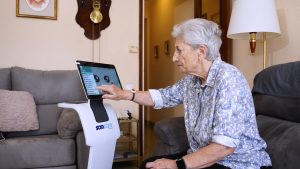



The i2CAT research center, in collaboration with Group Saltó as a technological partner, will create a digital telemedicine system to facilitate the monitoring of medication intake of chronic patients living in rural areas of the Alt Pirineu.
The pilot is aimed at detecting anomalies in the medication intake of chronic patients who do not have family or external support, to avoid decompensation of their health problems while ensuring that they continue to live in their homes with the maximum possible autonomy. For this reason, a digital system will be created based on the combined use of advanced digital technologies, specifically 5G, artificial intelligence (AI) and the Internet of Things (IoT).
This system will allow remote monitoring of patients, including the detection of irregularities in treatment adherence, combined vital signs, or abnormal changes in speech that can alert health services for prompt intervention. The system will also incorporate solutions to reduce medication waste.
Smart technology at home
In the technical field, the system consists of smart equipment installed in the patients’ homes. This set is made up of a MAIA device, which allows the person to be notified to take medication on schedule, as well as a Circutrack digital pillbox, equipped with advanced 5G connectivity.
The research staff will use AI technology to process the data collected by the MAIA device and detect irregularities in the adherence to treatment. At the same time, the pilot contemplates the implementation of a Personalized Medication Dosing System that will allow healthcare personnel to verify that patients have made an optimal collection of their medication at the pharmacy.
All the information obtained will be available in a web application developed by Group Saltó to be able to carry out personalized monitoring of each patient.
The technological solution is expected to be developed between January and May 2025. Between May and June, the system will be tested with real patients in collaboration with the basic health areas of La Seu d’Urgell and Alt Urgell Sud. In the execution of the first pilot, social worker staff from the Xarxa Òmnia and representatives of the La Seu d’Urgell City Council will also participate.
This is a pilot project, developed within the framework of the European project Digital Innovation Hub of Catalonia (DIH4CAT), in collaboration with the Àrees Digitals initiative, and funded by the Department of the Presidency of the Generalitat of Catalonia.